GMRS Radios: The Mid-Power Workhorse of Emergency and Outdoor Communication
If you’ve ever looked into walkie-talkies or two-way radios for emergencies, off-roading, or staying in touch when cell service fails, chances are you’ve come across the term GMRS. But what is GMRS? How is it different from FRS or CB? And why would you need a license to use it?
This blog breaks it all down. Whether you’re a casual camper, serious prepper, or just want reliable communication during a blackout, GMRS radios might be exactly what you need.
What Does GMRS Stand For?
GMRS stands for General Mobile Radio Service. It’s a UHF (ultra-high frequency) radio service regulated by the FCC and designed for short-to-medium range personal or family communication.
GMRS radios operate on the same 462–467 MHz band as FRS radios—but with much more power, more flexibility, and broader capabilities. However, there’s a catch: you need an FCC license to operate GMRS radios legally in the United States.
Who Should Use GMRS Radios?
GMRS is perfect for anyone who wants more power, better range, and a bit more capability than entry-level FRS walkie-talkies. It’s ideal for:
- Families preparing for emergencies
- Outdoor enthusiasts (hikers, campers, overlanders)
- Neighborhood watch groups
- Farmers and ranchers
- Off-road clubs
- Preppers and survivalists
GMRS radios are especially useful when:
- You need to reach someone several miles away
- Cell service is unreliable or down
- You want stronger radios that are still fairly easy to use
GMRS vs FRS: What’s the Difference?
At first glance, GMRS and FRS radios can look identical. Many even share the same 22 channels. But under the hood, there are big differences.
| Feature | FRS Radios | GMRS Radios |
|---|---|---|
| License Needed | ❌ No license | ✅ Yes, FCC license required |
| Max Power Output | 0.5 to 2 watts | Up to 50 watts |
| Antenna Type | Fixed antennas only | Detachable or external antennas allowed |
| Repeater Use | ❌ Not allowed | ✅ Repeater use permitted |
| Range | 0.5 – 2 miles | 2 – 20+ miles (with repeaters) |
| Gear Cost | Lower ($20–$60) | Moderate to high ($80–$500+) |
| Flexibility | Basic | Advanced (antenna, vehicle mount, etc.) |
GMRS Licensing: What You Need to Know
To legally use GMRS radios in the U.S., you need to obtain a license from the Federal Communications Commission (FCC). Don’t worry—it’s easy, there’s no test, and it covers your whole family.
License Details:
- Cost: $35
- Valid for: 10 years
- Covers: You and immediate family (spouse, kids, parents, siblings)
- Test Required: ❌ No
How to apply for GMRS License:
To apply for a GMRS license, first obtain an FCC Registration Number (FRN) by registering on the FCC website. Then, log in to the Universal Licensing System (ULS), select “Apply for a New License,” choose “General Mobile Radio Service (GMRS)” from the drop-down menu, complete the application, and submit it along with the required fee. Once you create an FCC CORES account and apply for the GMRS license, you’ll receive a call sign (like WXXX123), which is technically required to be used when transmitting (though this is rarely enforced for casual users).
GMRS Radio Basics: Gear Overview
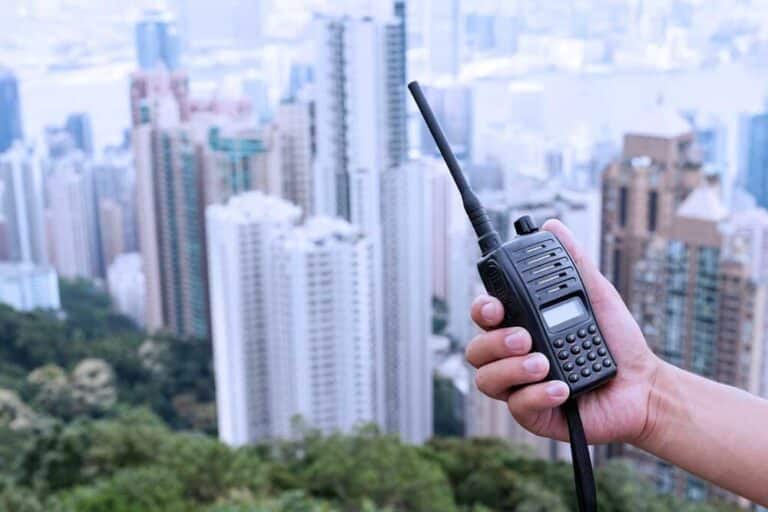
GMRS radios come in a few different styles, from handheld walkie-talkies to powerful vehicle-mounted units. Here’s a breakdown of what you’ll see on the market:
🔸 Handheld GMRS Radios
- Look similar to FRS radios
- Range: ~1–5 miles depending on terrain
- Power: Typically 1–5 watts
- Great for hiking, family camping, or coordinating at events
🔸 Mobile GMRS Radios
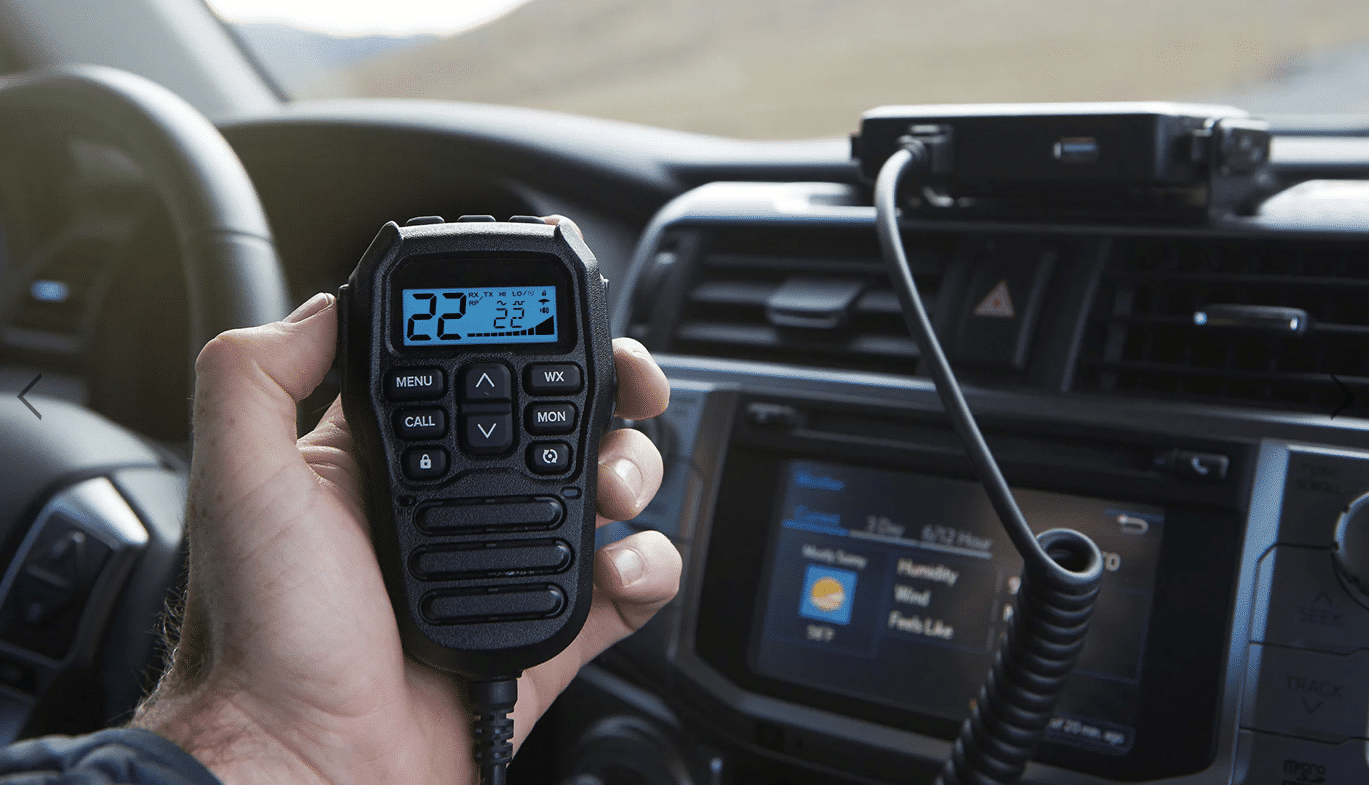
- Mount in vehicles like CB radios
- Range: 5–15 miles, sometimes more
- Power: Often 15–50 watts
- Can use external antennas for increased range
- Great for off-roading, road trips, or disaster communication
- Typically requires paying a shop to install.
🔸 GMRS Base Stations
- Used in homes or fixed locations
- Often paired with tall antennas on rooftops
- Range: 10–20+ miles with a good antenna setup
- Ideal for prepping and neighborhood emergency networks
Range: What Affects How Far GMRS Radios Can Reach?
GMRS radios have a much better range than FRS, but how far you can talk depends on more than just wattage. Here’s what really matters:
1. Wattage (Power Output)
- Handhelds: 1–5 watts
- Mobiles/Base stations: 15–50 watts
- More watts = more transmission power, but also faster battery drain on handhelds
2. Antenna Type
- Fixed stubby antennas (on handhelds) are limited
- Vehicle-mounted antennas provide significant range improvements
- Tall base station antennas offer the best performance
Pro Tip: The higher the antenna, the better the range—especially in flat or open terrain.
3. Terrain
- Flat/open areas: Up to 10+ miles
- Hilly or forested terrain: 1–5 miles
- Urban settings: Buildings and interference can reduce range dramatically
Repeater Use: A Big GMRS Advantage
One feature that makes GMRS unique is its ability to use repeaters—relay stations that boost your signal over a much wider area.
- GMRS repeaters often sit on towers or hills
- They can easily extend your range 20–50 miles or more
- You’ll need a repeater-capable radio (most GMRS radios are)
- Some communities run public GMRS repeaters—check your area
Find local GMRS repeaters here:
🔗 MyGMRS Repeater Directory
Common GMRS Use Cases
Neighborhood Emergency Networks
Set up a local communication net for disasters, blackouts, or severe weather when phones go down.
Hiking, Camping, or Overlanding
Stay in touch with your crew even when there’s no cell service—especially in remote or mountainous areas.
Farm and Property Management
Communicate across acres of land with family or workers—no cell tower needed.
Off-Roading & Convoy Travel
Coordinate with other vehicles, call out hazards, or stay connected in a caravan with ease.
Community Events or Security
Run logistics for events, coordinate volunteers, or set up local safety patrols without relying on spotty mobile networks.
Are GMRS Radios Worth It?
Absolutely—if you want range, reliability, and no test barrier. GMRS hits the sweet spot between beginner-friendly and powerful. Compared to FRS, you get more distance and flexibility. Compared to ham, there’s no studying or testing.
They’re perfect for:
- Families preparing for natural disasters
- Outdoor lovers who go beyond cell coverage
- Communities building local resilience
- Preppers who want reliable comms without the red tape
Final Thoughts
GMRS radios are one of the best-kept secrets in off-grid communication. For a small investment and a simple FCC license, you unlock far more power and range than typical walkie-talkies. Whether you’re hiking, planning for emergencies, or building a neighborhood comms net, GMRS is a smart, reliable choice.
Stay tuned for our next post in the series, where we’ll compare GMRS to CB and Ham radios in more detail—or go deep on setting up your first GMRS repeater.